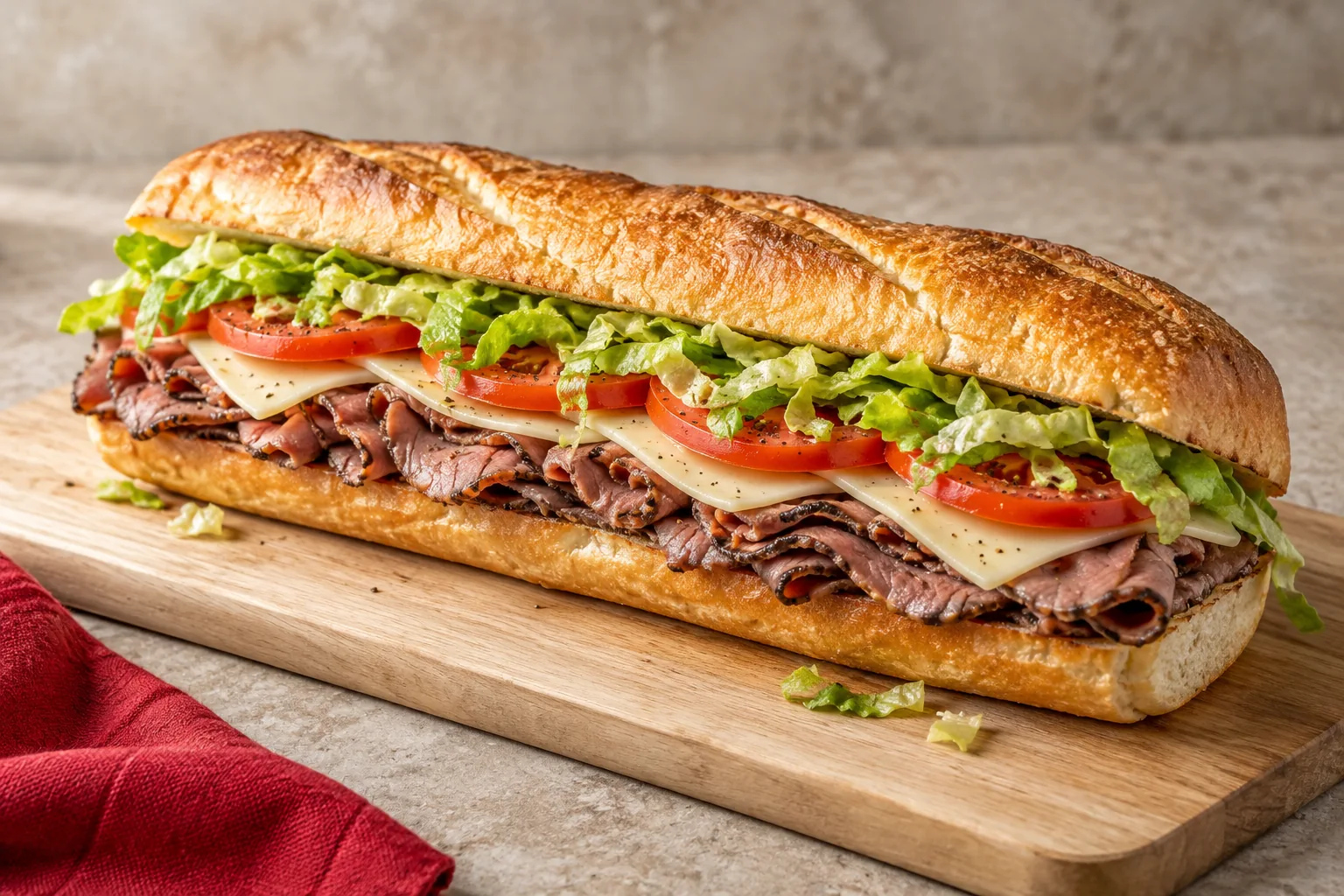
A footlong price is useful only when it describes the sandwich you will actually buy. The restaurant, recipe, extra ingredients and ordering method all matter. A promotional headline may cover selected classics, while the sandwich in your basket has additional cheese, a different protein or a meal upgrade. Start with the item itself, then compare the final total.
This guide explains how to read Subway footlong prices in Canada without confusing a starting price with a completed order. It also gives you a practical way to compare a footlong with two smaller sandwiches, a combo or another lunch option. There is no verified nationwide price list here: your selected restaurant remains the source for an order-specific quote.
Quick answer: select your Canadian restaurant, choose the footlong size, finish the customization and review the basket. Compare that amount with the same order through another channel before deciding which offer is better.
What a footlong price should include
A useful quote identifies four things: the recipe, the size, the location and the purchase channel. “Chicken sandwich” is too broad for a meaningful comparison. A plain chicken build and a named recipe with multiple toppings may have different starting prices. Likewise, a photograph of a large sandwich does not establish which size a menu tile has selected.
Record the amount beside the actual footlong option in the customization screen. Then check whether you are viewing the sandwich alone or a meal. A button that says “from” is a starting point, not a promise that every version has that price. Open the options before using the number in a budget.
Keep the currency in view as well. Canadian and American promotions can appear beside one another in search results. A dollar sign alone does not tell you which market the page serves. Use the Canadian site and the restaurant address, rather than the appearance of the advertisement, to establish the context.
Read value promotions as offers, not a price list
At our October 7, 2026 review, Subway Canada's official homepage displayed a promotion for five footlongs under C$10 each. That is an observed advertising headline, not evidence that every footlong qualifies or that the offer will still be active when you order. Open the current offer and its conditions at the time of purchase.
We could not retrieve the linked terms during this review, so we do not publish a qualifying sandwich list or an end date. This matters because a useful price guide should distinguish what was visible from what was confirmed. A screenshot without the conditions cannot answer questions about substitutions, store participation or purchase limits.
Treat any promotion as a possible reduction after choosing your lunch. If the eligible recipe is something you would not otherwise want, compare the actual alternatives instead of chasing the lowest headline. A modest saving on the wrong order is not necessarily good value for you.
Footlong or two 6-inch sandwiches?
If two people want the same recipe, compare one footlong with two equivalent 6-inch orders. If they want different proteins or different bread, the smaller orders may offer a more useful comparison. Do not assume the restaurant can split every ingredient or promotion across a single footlong; ask before ordering.
| Your situation | What to compare | Detail to check |
|---|---|---|
| Different tastes | Two separate small sandwiches | Each person's additions and sauces |
| One lunch today | Footlong alone versus smaller meal | The food you actually intend to eat |
| Group pickup | Individual totals versus a shared plan | Labels, substitutions and pickup time |
The arithmetic is straightforward: two smaller sandwiches cost twice the selected 6-inch price only when the recipes and additions are identical. Compare the final baskets if the orders differ. Our 6-inch sandwich guide focuses on choosing a smaller order without accidentally turning it into a more expensive meal.
A worked comparison without invented menu prices
Imagine that your selected footlong costs F dollars, while one equivalent 6-inch sandwich costs S dollars. The sandwich-only difference is 2S minus F. A positive result means the footlong has the lower sandwich price; a negative result means the two smaller sandwiches have the lower price. This is a comparison method, not a claim about Subway's current prices.
Now add the parts that differ. If the shared footlong requires a paid extra that both smaller orders would not need, include it on the footlong side. If one purchase qualifies for a discount and the other does not, compare after that discount appears. Use totals from the same moment so an expired offer does not distort the result.
This method is particularly useful when a value promotion covers a footlong but leaves a favourite premium recipe at its regular price. The best reference is the lunch you intended to buy, not an unrelated sandwich with a lower starting amount.
Where extras can change the total
Extra protein, additional cheese and other paid additions can change the economics of a footlong. The important point is not which extras are supposedly free across Canada; it is whether your local ordering screen shows a charge. Read each change as you make it and check the basket again when you finish.
A practical approach is to build the sandwich in two passes. First choose the base recipe, bread and size. Then add only the changes you want enough to pay for. This keeps the original price visible in your mind and makes it easier to spot the step that raised the total.
If an ingredient is unavailable, do not assume its replacement has the same cost. At the counter, ask for the new amount before the order is completed. Online, inspect the revised basket. A substitution may also change the flavour, texture or dietary suitability of the recipe, so price is only one part of that decision.
Pickup and delivery are separate comparisons
Use the same sandwich configuration when comparing pickup with delivery. A delivery total may contain charges that do not appear in the sandwich listing. Review the displayed fees, any minimum order, the selected delivery address and the final amount before paying. A lower menu price can still produce a higher completed order.
For an office lunch, include the practical cost of collection. A pickup option can be cheaper in money but harder to fit into a short break. Conversely, adding items merely to meet a delivery threshold can erase a saving. Compare the whole decision rather than judging the meal from a single line on the menu.
Keep the store address fixed where possible. Comparing one restaurant's pickup menu with another restaurant's delivery menu does not isolate the effect of delivery. It mixes location and purchase channel together, making it harder to understand why the figures differ.
Choose a build that suits the journey
A footlong taken straight to a nearby table has different practical needs from one carried across town. For a longer journey, consider asking for less sauce or for suitable condiments separately where the restaurant permits it. This is a texture preference, not a guarantee about packaging or preparation.
Plan where and when you will eat before buying a larger sandwich for later. Do not use a value calculation as a substitute for safe food storage. If saving part of the meal is important, consult current food-safety guidance for its ingredients and your circumstances. A larger order only makes sense when you can use it appropriately.
For shared lunches, confirm which person wants which half before assembly begins. A simple written list of preferences is often clearer than several last-minute corrections. For more help with meal planning, see our value and ordering guide.
Before you pay
Check the restaurant address, footlong selection, recipe name, paid additions, meal status and pickup time. If using an offer, verify that the discount is actually present in the basket. An advertising banner at the top of a page does not establish that your selected order qualifies.
Save the receipt when you need to compare future orders. A useful record includes the date and location rather than just the amount. Prices can change, and the same total can describe very different sandwiches. For the wider category overview, return to our Subway Canada menu guide.
The most reliable footlong price is the one attached to a fully specified order. Once you have that figure, deciding between sizes and meal formats becomes a clear comparison instead of a guess based on a promotion.