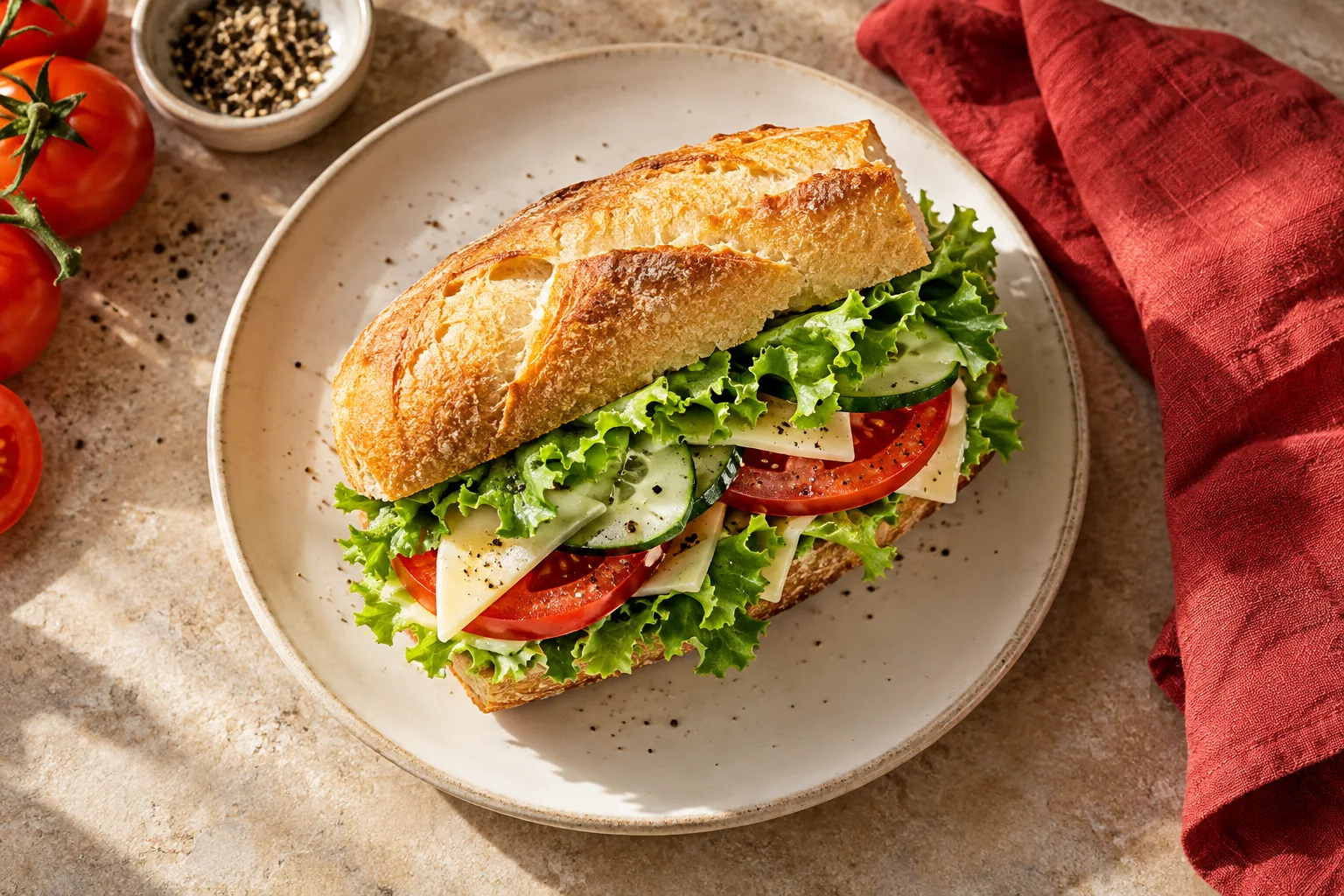
A smaller sandwich can be the right lunch without being the cheapest lunch after every extra is added. The 6-inch choice is most useful when it matches your appetite, your schedule and the rest of the meal. This guide starts with that decision, then explains how to check the price of the exact order you want.
We do not assign a national price to every Subway 6-inch sandwich. A menu tile may show a starting selection, a meal or a recipe that changes after customization. The Canadian restaurant's completed basket is the place to confirm the amount. What follows is a practical framework for comparing smaller orders with fewer surprises.
Start with the meal, not the size upgrade
Think about what you want lunch to include before opening an offer. If a 6-inch sandwich is enough for the occasion, comparing it with a discounted footlong is not the same as comparing two identical meals. The larger sandwich may offer more food per dollar while still costing more than you planned to spend.
A useful question is: “Would I buy the additional food without the promotion?” If the answer is no, keep the smaller order as your baseline. If you intend to share, or genuinely need a larger meal, compare both sizes using the same ingredients. Value depends on the food you will use rather than the largest possible portion.
This approach also helps when ordering for somebody else. Ask about appetite and preferred ingredients instead of assuming an adult always wants a footlong or a child always wants a particular package. A size name is not a dietary recommendation, and a restaurant menu cannot determine an individual's needs.
Find the actual 6-inch selection
Begin at the official Subway Canada website and select the restaurant you intend to use. Open the sandwich itself, then read the available sizes. Do not infer size from a search result, a photograph or the lowest price visible on a category page. The options screen provides the context that those shortcuts often omit.
Check whether the recipe is a standard build or a named combination. Two turkey sandwiches can have different starting totals because they include different ingredients. Remove or add ingredients only after you understand the initial selection. That makes it easier to notice a price change and decide whether it is worth keeping.
If the menu does not show the smaller size for a particular item, ask the restaurant or select another listed product. Avoid assuming that every advertised build can be ordered in every format. Availability should come from the local menu, not from a general guide like this one.
A small-order comparison sheet
Use three possible orders rather than a long list of sandwiches. The first is your preferred 6-inch sandwich alone. The second is that same sandwich with only the side or drink you actually want. The third is any relevant meal offer. Keeping the recipe fixed makes the comparison readable.
| Option | Record this amount | Why it matters |
|---|---|---|
| Sandwich plus one extra | Subtotal with the chosen extra | Avoids buying an unwanted bundle |
| Available meal offer | Basket with qualifying items | Shows the offer's real cost |
| Larger sandwich alternative | Equivalent footlong basket | Useful only if you want more food |
Write down whether taxes and other displayed charges are included in each total. You do not need a spreadsheet for one lunch, but consistent labels prevent an easy mistake: comparing one pre-checkout subtotal with another completed bill. For the larger-size arithmetic, read our footlong comparison guide.
Bread, filling and sauce work together
For a smaller sandwich, each strong flavour can be more noticeable because there is less room for competing ingredients. An ingredient-led way to choose is to pick one main flavour, one source of crunch and a sauce that supports both. This is an editorial suggestion, not a restaurant recipe or a claim from a taste test.
If you want a mild lunch, begin with a filling you already enjoy and avoid adding several unfamiliar sauces at once. If you want heat, decide whether it should come from the sauce, a pepper topping or the main recipe. You can then judge the result more easily and adjust one element next time.
Bread changes texture as much as appearance. Check what the selected restaurant offers and ask about toasting if it matters to your order. We do not promise a particular bread at every Canadian location. Likewise, an ingredient described as mild elsewhere may not feel mild to you, so preferences remain personal.
Is a combo worthwhile for a smaller lunch?
Compare the cost of the combo with the separate items you genuinely want. If you normally drink water and do not want a side, a meal package may add cost without meeting a need. If you already planned to buy a drink and a cookie, the offered bundle deserves a direct comparison.
Read the included sizes and choices. A bottled drink, fountain drink and hot beverage are not interchangeable simply because each appears under beverages. The permitted side can also matter. Choose the same items when comparing totals, or write down the differences so the decision is honest.
Avoid treating an offer's saving as money earned. Spending more to obtain a larger stated discount can still leave you with a higher bill. Our cookies, sides and drinks guide explains how to compare those additions separately when the sandwich is already decided.
Ordering a simple sandwich for a family
Write down one person's order at a time: size, main filling, cheese preference, vegetables and sauce. This reduces confusion when several small sandwiches look similar after wrapping. Ask the restaurant whether it can label them, particularly if some ingredients must be kept out of a specific order.
A dedicated kids' option should only be treated as available if it appears at that restaurant. If it does not, ask which ordinary menu choices can meet your needs. Do not infer included drinks, toys, sides or portion sizes from another country's menu. The smaller sandwich format and a children's meal are different things.
Where allergies are involved, tell the restaurant before preparation and consult the current official ingredient information. Removing a visible ingredient does not by itself establish that an order is suitable. Keep dietary requirements separate from ordinary taste preferences so the staff understand the nature of the request.
Three occasions where the smaller format can fit
For a short work break, a compact sandwich with a familiar filling can simplify the order. Decide on ingredients before reaching the counter and avoid choosing a complex new combination when time is limited. Check the collection time rather than assuming a smaller order will always be ready faster.
For a day with several planned meals, a smaller lunch may suit the way you prefer to eat. That is a matter of personal appetite and schedule, not a promise that one size is nutritionally better. Consider the whole meal, including any drinks and extras, if you are comparing nutrition information.
For two people with different tastes, two 6-inch orders can make more sense than sharing one footlong. Each person can choose a different recipe. The price may be higher or lower depending on the selected products and offers, so compare the actual basket rather than relying on a general rule.
Questions to settle before checkout
Confirm that the selected size is still 6-inch after changing a recipe or applying an offer. Then read the additions and the restaurant address. If ordering on behalf of someone else, repeat their essential preferences back to them before paying. It is easier to correct a basket than an already prepared meal.
If a price looks unexpectedly low, check the serving and the offer conditions. If it looks unexpectedly high, review meal upgrades and paid extras first. The discrepancy may have a simple explanation, but an unclear total is a reason to ask, not a reason to guess.
A good smaller order is specific: the right sandwich, the desired additions and a clear final amount. Use the main menu overview to compare categories, then return to the selected restaurant for the current quote.