The most useful way to read a named sandwich menu is as a set of starting recipes. Instead of deciding every ingredient from scratch, you begin with a combination and decide whether it suits you. Subway Series searches can lead to older launch pages as well as current local menus, so the first task is to separate a recipe concept from today's availability.
This guide explains that difference. It looks at how to compare a chef-crafted build with a simpler sandwich, how to understand names that suggest a particular flavour and which questions to ask before changing the ingredients. It is not a claim that every sandwich previously sold under the Series name remains available across Canada.
Read the local menu before the campaign name
A campaign page can explain why a menu was introduced, but it does not necessarily establish what your restaurant serves now. Start with the Canadian ordering menu for the actual location. Then use the recipe description, available sizes and customization options to understand the item you can buy today.
The official Canadian menu reviewed for restaurant 14599-0 distinguishes several sandwiches as “Chef-crafted.” Examples include Great Canadian Club, Teriyaki Crunch and The Big Veggie. These are examples from one restaurant's published menu, not a national availability guarantee. Check the restaurant menu source if you want to inspect that particular listing.
Do not assume that a number, category or recipe name is permanent. If you remember an older favourite, describe the ingredients you liked rather than relying only on its previous campaign label. The staff or current menu may be able to identify a listed alternative, but a renamed item is not automatically an identical recipe.
A recipe has a flavour structure
A named sandwich usually gives you several clues: its main filling, a sauce direction and sometimes a texture or regional reference. Read the ingredient description instead of guessing from the name alone. A word such as “crunch” does not tell you every ingredient responsible for that texture, and a geographic name does not establish where each ingredient originated.
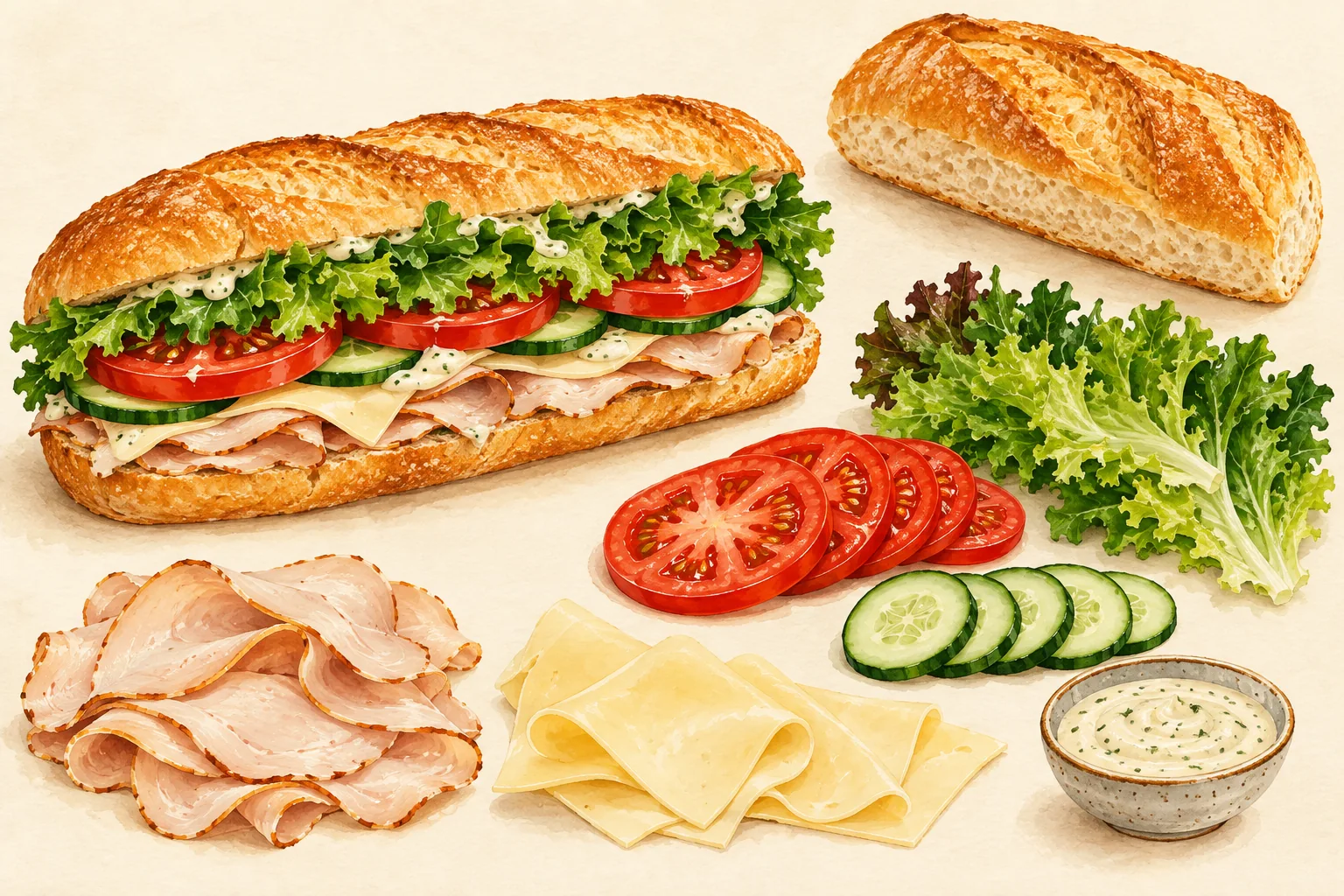
For comparison, break the description into four parts: main filling, cheese, vegetables or other toppings, and sauce. Then identify which part appeals to you most. This is more useful than ordering the sandwich with the longest description or the most dramatic title. It also makes substitutions easier to evaluate.
Suppose you like the main filling but dislike the sauce. Check whether that change is available before buying. If the sauce is central to the recipe, removing it may produce a very different sandwich. That is not necessarily a problem; it simply means you are choosing a customized version rather than judging the standard combination.
Chef-crafted or build your own?
Choose a named recipe when you want a starting point and its listed ingredients mostly suit you. Choose a simpler build when you already know exactly which filling, cheese, vegetables and sauce you want. Neither method is inherently more sophisticated. They solve different ordering problems.
| Starting point | Useful when | Check before ordering |
|---|---|---|
| Simple sandwich | You already have a preferred combination | Price of requested extras |
| Familiar recipe with one change | You want a small adjustment | Whether the change affects the total |
| Heavily modified recipe | Several ingredients need replacing | Whether a simpler starting build is clearer |
A helpful test is to count the changes you plan to make. If you are removing almost everything that defines the named sandwich, compare it with a basic alternative. You may find a clearer order, but do not assume it will always be cheaper. Only the local basket can settle that question.
Compare recipes on equal terms
When two sandwiches look similar, select the same size before comparing their totals. Then check what is included. A named combination may contain ingredients that would be paid additions on another build. Equally, a premium-sounding name does not prove that the portion or value is better.
Avoid reducing the comparison to meat alone. Cheese, sauce and included toppings can change both taste and cost. If you remove an included ingredient, do not assume the price will decrease automatically. If you add an ingredient, look for a displayed charge instead of relying on what happened at another restaurant.
The footlong price guide explains how to compare finished baskets. For Series-style ordering, the same principle applies: compare the exact versions you would eat, not two headline prices attached to different meals.
Use one deliberate change at a time
If you are trying a new combination, changing one ingredient makes the result easier to judge. You might keep the main recipe and choose a different sauce, or keep the sauce and adjust one topping. Changing the bread, filling, cheese and several toppings at once makes it hard to know what you actually liked.
This is a practical tasting method, not a claim that we tested the menu. Our recommendations are based on the ingredient combinations described by the restaurant and common ordering considerations. Personal preferences can differ, particularly around heat, sweetness, acidity and texture.
For a first order, ask yourself what you most want to avoid. An unwanted strong flavour can matter more than a small extra you enjoy. Read the description for that ingredient first, then decide whether the available modification leaves a sandwich you still want.
Names are not dietary labels
A vegetable-led name does not automatically mean vegan, and a chicken-based name does not establish a low-sodium or low-calorie meal. The full recipe matters, including bread, sauce and cheese. Look at the current Canadian nutrition and ingredient documents for the selected build rather than drawing conclusions from the main filling.
If you have a food allergy, communicate it before the sandwich is made. Ingredient removal and allergy management are different requests. Subway's official allergen information warns that contact with other ingredients can occur during preparation. A customized order should not be described as allergen-free simply because an ingredient was omitted.
Our nutrition and customization guide explains how to match an information table to a particular recipe. It also distinguishes comparing nutrients from deciding whether a meal is appropriate for a medical need.
A practical way to choose for a group
Ask each person for a preferred flavour direction and any ingredients they cannot or do not want to eat. Then assign a specific recipe and size to each order. “Something with chicken” is not enough information if the available builds differ substantially in sauce, heat and toppings.
Keep modifications with the correct person's name in your notes. Read the final list once before checkout. If the restaurant cannot provide a requested substitution, choose a replacement deliberately rather than allowing one unclear change to affect several orders. Labelled packaging, where available, can make distribution easier.
For a group unfamiliar with the menu, present two or three relevant options instead of reciting every named sandwich. A short selection built around their stated preferences can be easier to manage than an open-ended list. Leave the final dietary decisions with the people eating the food.
What to do when an old favourite disappears
Start by identifying the feature you miss: the main protein, the sauce, the cheese or the overall texture. Check the current menu for that feature. A replacement with a similar title may be less suitable than a differently named sandwich with the ingredients you actually enjoyed.
Ask the local restaurant what is possible within its current menu. Do not arrive with an old screenshot expecting every ingredient to be stocked. Seasonal products, recipe changes and local supply can make an earlier combination unavailable. An honest guide should help you make a new decision rather than promise an exact recreation.
Use our ingredient-led sandwich shortlist when you want a starting point based on flavour preferences. The aim is to choose a recipe intentionally, understand its price and make only the changes that improve the meal for you.