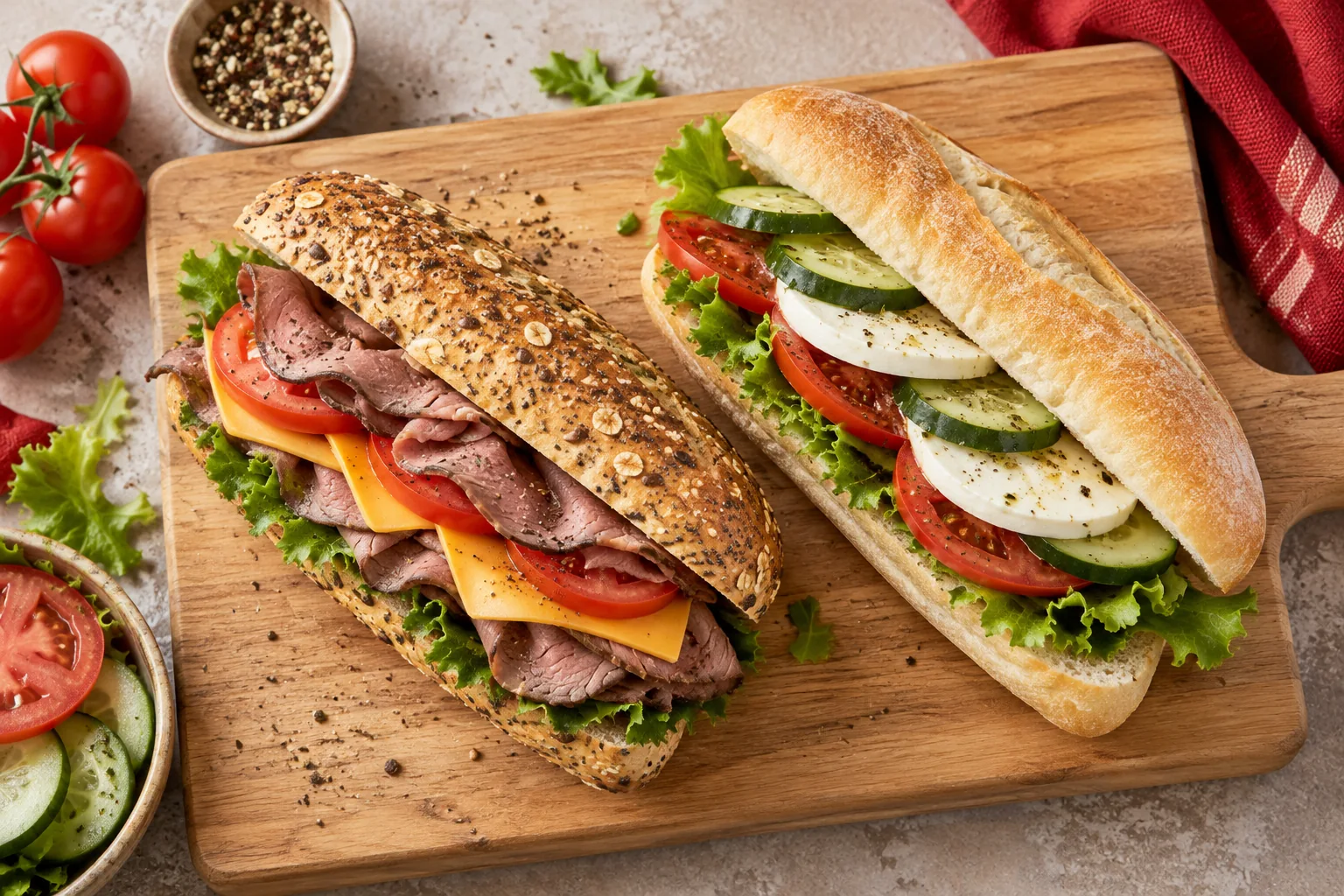
Choosing between sandwich chains is easier when you compare a lunch you would actually order. A lowest-price item at one restaurant and a premium meal at another are not equivalent purchases. Begin with a preferred filling, a useful serving size and the extras you want, then inspect the local menus side by side.
This guide compares how to evaluate Subway, MR.SUB and Firehouse Subs in Canada. It does not claim one chain is always cheaper, healthier or better tasting. Those conclusions would require consistent local prices, matched recipes and evidence beyond a general menu review. Instead, it offers a practical comparison you can repeat near home or work.
Three chains, three local menus to inspect
Use the official Canadian sources as your starting points: Subway Canada, MR.SUB and Firehouse Subs Canada. Select a nearby restaurant wherever the ordering system requires it. This connects the comparison to places you can actually use rather than to national marketing pages alone.
MR.SUB's official site provides menu, location and nutrition resources, and its classics page lists deli-style choices. Firehouse Subs' Canadian ordering information says availability, prices and offers may differ from in-restaurant selections. These are reasons to compare local orders carefully, not grounds for ranking either chain above the other.
Subway's Canadian menu provides both familiar sandwich directions and named combinations. As with the other chains, the useful details are the recipe, serving and completed order. A brand's broad identity can help you browse, but it cannot answer the specific question of what today's lunch will cost at your nearest location.
Set one comparison order
Choose a filling you enjoy and find the nearest reasonable equivalent at each chain. If exact equivalents do not exist, record the differences. A sandwich containing additional meats, cheese or another sauce should not be treated as identical just because the main ingredient appears in both names.
Then choose whether you are comparing sandwiches alone or complete meals. Keep that choice consistent. If one option includes a drink and side, either add comparable extras to the others or label the comparison as different meal formats. Clear differences are more useful than forcing unrelated orders into a false one-to-one comparison.
Finally, note the location and date. A price comparison without either can become misleading quickly. You do not need to collect every price in a city; you need enough current information to decide among the restaurants you are genuinely considering.
Size names do not establish equal portions
A 6-inch, a medium and another chain's small sandwich may not describe equivalent portions. Read any published serving information instead of assuming that the names line up. Bread shape, fillings and standard additions can differ even when the products look similar in photographs.
If your main question is cost, compare orders you expect to find suitable as meals. If your question is nutrition, use the documented serving and recipe. Those are related but distinct comparisons. An order can have a lower total price while also being a different amount of food.
Avoid presenting a cost-per-inch calculation as a complete measure of value. It ignores the filling, the rest of the meal and whether you want that portion. A simple record of the actual order often communicates more than a precise ratio built on incomplete information.
A side-by-side worksheet
| Detail | Subway | MR.SUB | Firehouse Subs |
|---|---|---|---|
| Recipe | Record the exact build | Record the closest desired build | Record the closest desired build |
| Serving | Check selected size | Check selected size | Check selected size |
| Changes | Record paid additions | Record paid additions | Record paid additions |
| Meal extras | Match what you want | Match what you want | Match what you want |
| Final total | Check the basket | Check the basket | Check the basket |
This worksheet intentionally leaves price cells unfilled. We have not verified matched current baskets across these chains. Entering invented national averages would make the table look more complete while making it less useful. Fill it from the local menus when you are ready to order.
Compare the customization you actually need
If you like choosing every component, inspect each restaurant's current ordering options. If you prefer a named recipe with few decisions, read those descriptions instead. The better fit depends on how much control you want and whether the available changes produce an order you will enjoy.
Keep track of what is included and what costs extra. An ingredient that is part of one standard recipe may be an addition on another. Comparing only the base amounts can hide that difference. Equally, removing an ingredient may not reduce the price, so do not assume a simpler version creates a discount.
For Subway specifically, our Series menu guide explains the difference between starting with a named build and choosing a simpler combination. Apply the same reasoning to the other menus without assuming that their customization rules are identical.
Taste comparisons need honest labels
Menu descriptions can tell you ingredients and intended flavour directions. They cannot prove which sandwich tastes best to you. This article is a desk-based menu comparison, not a tasting panel. We do not attach scores or claim first-hand restaurant experiences that did not take place.
When choosing from descriptions, identify the flavour you want: mild, smoky, sweet, spicy or vegetable-led. Then read the sauces and toppings. A favourite protein with an unwanted sauce may be less appealing than another protein in a combination you prefer. Taste decisions often become clearer when separated from brand loyalty.
If you do your own comparison over time, record the exact recipe and changes. That makes your notes more useful than a general impression about an entire chain. One location, one order and one occasion should not automatically stand for every restaurant operating under the same name.
Compare pickup with pickup first
Hold the purchase channel steady for the first price check. Compare pickup orders with pickup orders, or delivery orders with delivery orders. Mixing a counter menu at one chain with an app delivery total at another can make fees and channel differences look like recipe differences.
After that first check, compare the channels that fit your day. Read the displayed charges and collection or delivery estimates. The cheapest basket may not be the most practical if it requires a trip you cannot make. Conversely, a convenient delivery choice may cost more than you intended once all charges are included.
A short lunch break calls for a realistic plan. Confirm the restaurant address, its current operating information and the expected collection process. Do not assume a familiar chain will always be faster than another; your actual local order and timing matter more than a broad reputation.
Nutrition comparisons require matching documents
Use the current Canadian nutrition information from each chain and compare the listed servings. A standard recipe at one restaurant and a heavily customized recipe at another do not form a clean comparison. Include the drink and side if you are evaluating the full meal.
Do not decide allergy suitability from a side-by-side chart. Ingredient information and preparation conditions require a separate check with the restaurant. MR.SUB's official site, like Subway's guidance, discusses allergen risks. This site does not certify any chain or customized order as safe for a particular allergy.
Our nutrition and customization guide explains how to keep recipe assumptions visible. The method is useful across menus even when the brands use different serving names or organize their documents differently.
Broaden the search without losing the Canadian context
If none of the nearby sandwich choices fits, consider another restaurant category or an independent local shop. AllTheMenus' restaurant menu guides can help you discover alternatives, but its coverage includes other markets. Confirm the country, location and current official menu before applying any price to a Canadian lunch.
A broader search does not need to become an exhaustive ranking exercise. Choose two or three feasible alternatives and compare the orders that appeal to you. Clear local choices are more useful than a long list of brands with no connection to your route, budget or preferences.
For Subway-specific meal arithmetic, use our value and ordering guide. The best chain for a particular lunch is the one whose actual menu, completed price and collection plan fit that occasion. A transparent comparison leaves room for the answer to change another day.